
Rethinking How to Warn the Public About Massive Disasters
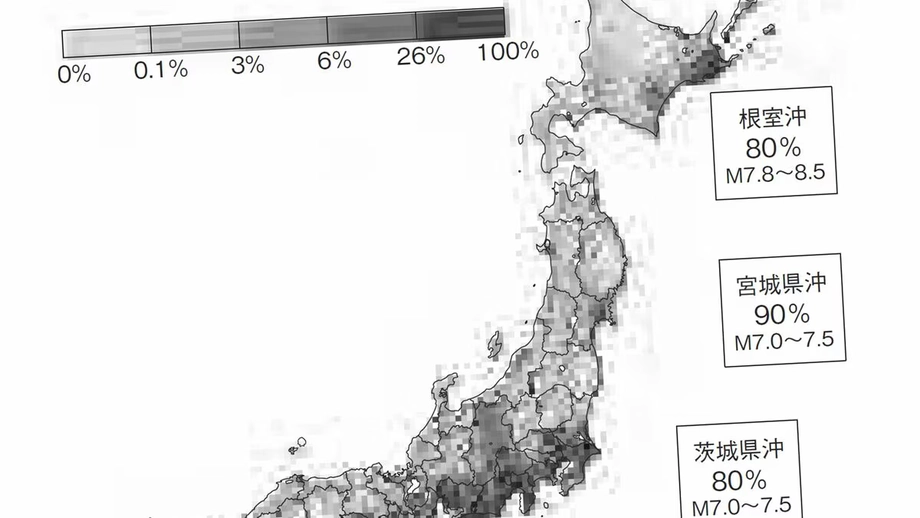
Japan faces a sobering geological reality along its Pacific coast, where the Nankai Trough sits as a colossal zone of tectonic collision. Government panels estimate the probability of a magnitude 8 to 9 megaquake striking this region within the next 30 years at 60 to 90 percent or higher, with some technical models placing the upper bound near 94.5 percent and others suggesting a range of 20 to 50 percent. For ordinary citizens, however, abstract statistical probabilities rarely translate into actionable urgency. Hiroki Kamata, an emeritus professor at Kyoto University, has argued that telling people an earthquake has an 80 percent chance of happening within 30 years fails to provoke the necessary response. People live their daily lives according to concrete deadlines and specific quantities, much like a bakery fulfilling a specific order by a set time.
İçindekiler
- Rethinking How to Warn the Public About Massive Disasters
- The Birth of the Disaster Management Agency and National Urgency
- A New Emergency Request for Citizens and the Surge in Preparedness
- Historical Parallels and Western Japan Pre-Activity Periods
- Lessons in Resilience from Kochi Prefecture and Zero-Carbon Defense
- Empowering the Younger Generation Through Long-Range Vision
- Practical Mitigation Steps That Save Lives
- Connecting Past Seismic Events and False Alarms
- At a Glance
To bridge this communication gap, Professor Kamata suggests reframing the vast scientific data into two straightforward concepts that anyone can grasp immediately. Instead of abstract percentages, he urges the public and corporations to remember that the Nankai Trough megaquake is expected to arrive in about 10 years, and its destructive scale will reach roughly 10 times the damage witnessed during the Great East Japan Earthquake in 2011. This simplified approach aims to motivate individuals and business leaders to take concrete preparatory steps instead of freezing in the face of complex geological jargon.
The Birth of the Disaster Management Agency and National Urgency
Recognizing the mounting risks of both a Nankai Trough megaquake and a potential capital region disaster, the Japanese government established a new central command organization called the Disaster Management Agency on November 2, 2026. This newly formed body expanded its personnel to 1.6 times the size of the former Cabinet Office disaster department, granting it comprehensive authority to oversee everything from routine preparedness to emergency rescue, recovery, and reconstruction efforts. Goshi Hosodo, who previously managed nuclear emergency responses following the 2011 disaster, took office as the first minister in charge of this agency, emphasizing that preparing the nation for a potential catastrophe is a national mission.
The agency immediately requested a fiscal year 2027 budget of 652 billion yen, roughly triple the allocation of the previous year, to strengthen execution capacity and regional cooperation. Local authorities across the nation have begun testing these operational frameworks. In Fukushima Prefecture, local officials, police, firefighters, and about 650 personnel from the Self-Defense Forces gathered in Minamisoma City for a large-scale disaster response drill following a simulated seismic intensity scale reading of lower 6 and a major tsunami warning. Participants highlighted that direct coordination and face-to-face networking among different emergency response agencies remain vital to ensuring that future commands translate into effective rescue operations.
A New Emergency Request for Citizens and the Surge in Preparedness
Alongside institutional restructuring, the newly established national disaster command issued an urgent public appeal demanding that citizens take immediate responsibility for their own survival. The official emergency request outlines five core actions for every household, including conducting seismic evaluations, retrofitting older housing structures, anchoring heavy furniture securely to walls, stockpiling essential survival goods, and reviewing local hazard maps alongside evacuation routes. Officials stressed that during a nationwide crisis affecting tens of millions of people, emergency responders will be entirely overwhelmed, making self-reliance the absolute foundation of survival.
Retailers across the country quickly registered the impact of this high-level government appeal. At a home center branch in Fukushima Prefecture, store managers reported a dramatic surge in demand for essential safety equipment immediately following the announcement. Sales of emergency water supplies doubled, portable go-bags quadrupled, and emergency toilets that function without running water surged to more than 20 times their usual sales volume as residents rushed to secure basic supplies. Similar spikes occurred for items addressing seasonal risks and localized flooding, reflecting a growing public awareness that personal stockpiles are the first line of defense against compounding infrastructure failures.
Historical Parallels and Western Japan Pre-Activity Periods
Geological analysis indicates that major tectonic events often form part of a broader, centuries-long cycle rather than isolated incidents. Takuya Nishimura, a professor at the Disaster Prevention Research Institute of Kyoto University, pointed out that western Japan has already entered a pre-earthquake activity period associated with the approaching Nankai Trough event. As tectonic stress accumulates along the plate boundary where the Philippine Sea Plate dives beneath the landmass, inland active faults experience elevated strain. This dynamic mirrors historical sequences, such as the 1943 Tottori earthquake that preceded the 1944 Tonankai and 1946 Nankai megaquakes, as well as earlier patterns where the 1854 Ansei-Nankai earthquake preceded the Meiji Restoration.
Recent seismic activity underscores the reality of this regional stress accumulation. On November 8, 2026, an earthquake with a magnitude of 5.7 struck eastern Aichi Prefecture at a depth of about 40 kilometers, producing a seismic intensity scale reading of upper 5 in Chita City. This marked the first time the prefecture experienced such strong shaking in approximately 30 years. Seismologists clarified that this event occurred within the descending Philippine Sea Plate rather than directly at the shallow plate boundary, meaning it is not a direct trigger for the Nankai megaquake itself. However, experts warn that densely populated regions like the Kinki area, which features numerous active faults, face severe risks from shallow inland earthquakes that can strike without warning during this broader tectonic awakening.
Lessons in Resilience from Kochi Prefecture and Zero-Carbon Defense
While government agencies coordinate large-scale strategies, municipal communities facing the most severe exposure are pioneering localized models of survival. Kuroshio Town in Kochi Prefecture faces a national worst-case tsunami projection reaching up to 34.4 meters following a Nankai Trough rupture. When this staggering projection was initially released by national authorities in 2012, it triggered profound despair and a wave of outward migration known as pre-disaster depopulation. Refusing to succumb to hopelessness, town leaders and residents established a firm slogan focused on refusing to surrender, running immediately to higher ground when shaking occurs, and demanding zero casualties or abandoned evacuations.
The town integrated disaster preparedness directly into daily municipal culture through a dedicated system where municipal staff members visit every local community group to map out evacuation routes and reinforce older buildings. Building upon this foundation, Kuroshio Town expanded its strategy into a pioneering zero-carbon disaster prevention initiative, recognized under national decarbonization programs in April 2023. The municipality began installing solar power generation systems and storage batteries across approximately 40 designated evacuation shelters. These installations ensure that even if a major earthquake cuts off regional power grids, evacuation sites will retain essential electricity for communication, lighting, and medical support, proving that environmental sustainability and survival planning can reinforce one another.
Empowering the Younger Generation Through Long-Range Vision
Preparing a society for a disaster that may not arrive tomorrow requires shifting how educational institutions approach long-term risk. Professor Kamata has long used a personal teaching exercise with university students, asking them to add 10 years to their current age and imagine where they will be when the Nankai Trough megaquake strikes. For students in their early twenties, this places the disaster squarely in their thirties or forties, a stage in life when they will likely be working as mid-level professionals, raising families, and holding community responsibilities. By asking students to write the impending catastrophe into a 10-year personal planner, educators encourage them to view preparedness not as a distant abstract theory, but as an essential personal duty tied to national survival.
This forward-looking mindset connects directly with historical precedents of national renewal. Following past disasters like the 1946 Showa-Nankai earthquake, post-war generations of young innovators and industrial leaders helped rebuild Japan into an economic powerhouse. Experts suggest that surviving the next national crisis will similarly require younger citizens to cultivate what is described as a long-range geological perspective, viewing natural hazards not merely as destructive forces, but as inevitable shifts that demand proactive adaptation, structural retrofitting, and robust community education.
Practical Mitigation Steps That Save Lives
Scientific data compiled for disaster reduction planning demonstrates that proactive measures can drastically alter the outcome of a major seismic event. National loss estimations indicate that implementing comprehensive seismic retrofitting across residential housing can reduce total building collapses by 40 percent and cut earthquake-related fatalities by up to 80 percent. Furthermore, studies show that if coastal communities utilize existing multi-story buildings for vertical evacuation and initiate movement within 10 minutes of initial shaking, casualties resulting from massive tsunamis can be reduced to just 20 percent of worst-case projections.
These figures highlight the vital importance of combining structural engineering improvements with immediate individual action. Because a massive disaster would overwhelm official emergency services and isolate millions of residents across wide swaths of the country, individual adherence to basic survival protocols remains indispensable. From securing household furniture and maintaining emergency food supplies to participating in local evacuation drills, every concrete action taken during peaceful times directly reduces vulnerability when the earth eventually moves.
Connecting Past Seismic Events and False Alarms
Japan's ongoing vulnerability to seismic activity is compounded by the technological challenges of rapid warning systems. On October 16, 2026, the Japan Meteorological Agency experienced an unexpected system failure when software processing errors mistakenly issued a nationwide earthquake early warning for a fictitious magnitude 9.9 earthquake. The alert, which triggered alarms across regions stretching from Hokkaido to central Japan, was traced to computational flaws in handling distant seismic data from an actual magnitude 6.9 earthquake near the Kamchatka Peninsula. The agency successfully canceled the false alert within eight minutes and implemented emergency software patches by that evening to prevent a recurrence, marking the first time a public early warning had been withdrawn since full system operations began.
This technical disruption occurred alongside other recent seismic events, including a deep magnitude 7.0 earthquake near the Ogasawara Islands that sent gentle tremors across eastern Japan without triggering tsunami threats, as well as ongoing earthquake swarms around the Tokara island chain. While scientists emphasize that these scattered events operate under distinct geological mechanisms and bear no direct relation to the impending Nankai Trough rupture, they serve as constant reminders of the nation's active tectonic setting. Whether responding to false alarms or actual deep-ocean tremors, disaster management authorities continue to refine monitoring accuracy while urging the public to maintain steady, everyday readiness.
At a Glance
- The probability of a magnitude 8 to 9 earthquake along the Nankai Trough within the next 30 years is estimated at 60 to 90 percent or higher.
- Kyoto University emeritus professor Hiroki Kamata recommends framing the threat simply around a 10-year timeline and a disaster scale 10 times larger than the 2011 Tohoku earthquake.
- The central government established the Disaster Management Agency on November 2, 2026, led by Minister Goshi Hosodo, with a requested budget of 652 billion yen for fiscal year 2027.
- The newly formed agency issued an urgent public appeal demanding that citizens secure furniture, retrofit homes, maintain at least three days of emergency supplies, and check local hazard maps.
- Kuroshio Town in Kochi Prefecture, facing a projected 34.4-meter tsunami, combined rigorous evacuation training with a zero-carbon initiative to install solar power and storage batteries across 40 evacuation shelters.
- Seismologists note that western Japan has entered a pre-activity period where inland fault stress increases ahead of the primary megaquake, highlighted by a magnitude 5.7 earthquake in Aichi Prefecture on November 8, 2026.
- Statistical models indicate that comprehensive structural retrofitting and prompt 10-minute tsunami evacuations can reduce building collapses by 40 percent and save up to 80 percent of potential lives.