
Taiwan Markets Hit Hard by Global Tech Selloff
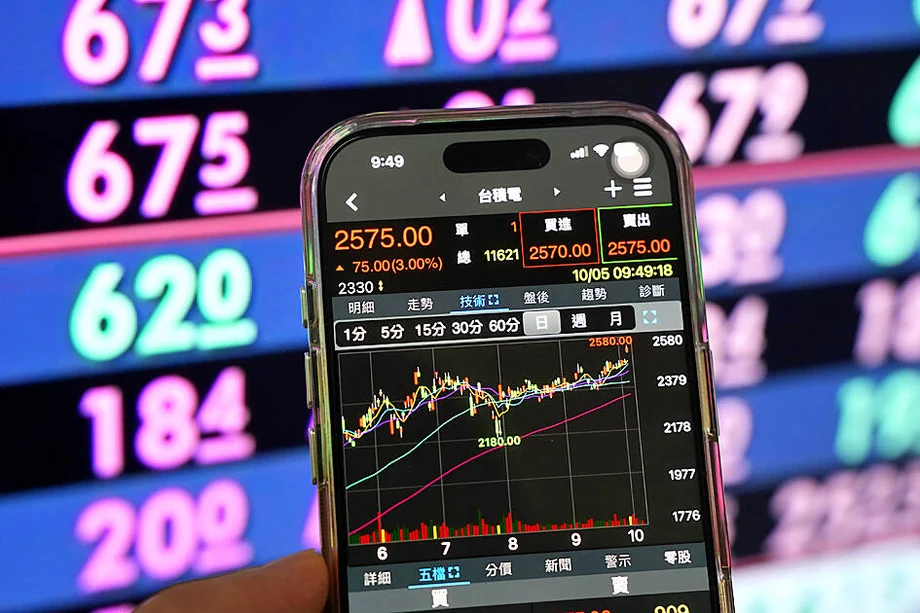
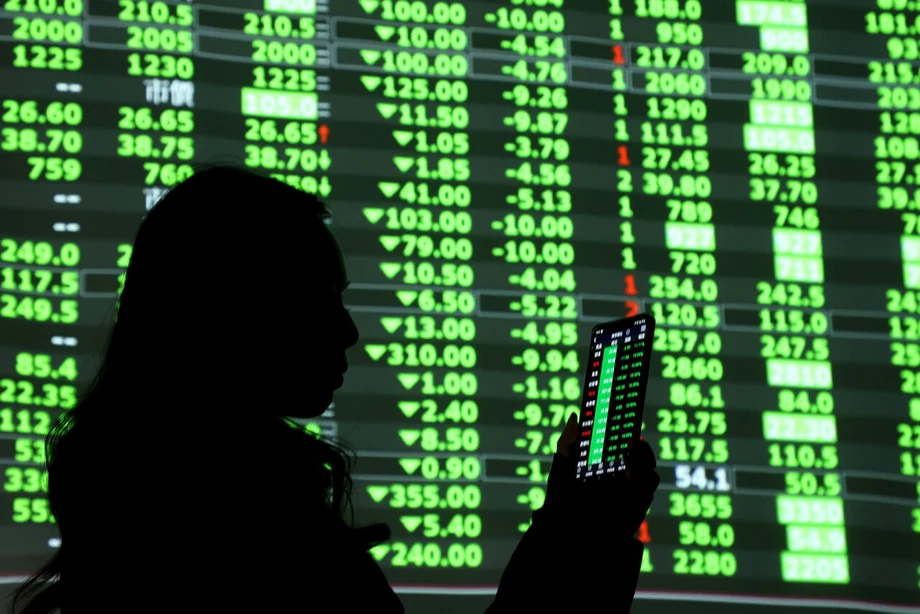
Taiwan's stock market experienced a historic downturn as the benchmark Taiex index plunged 7,641.83 points over the course of a single week, marking a 17.5 percent decline that represented the worst weekly performance since 1990. The steep losses culminated on November 20, 2026, when the index dropped 2,393.60 points, or 6.23 percent, to close at 36,033.29 after touching an intraday low of 35,738.68. The severe market correction left more than 300 listed and over-the-counter companies hitting their daily limit-down levels, while trading turnover surged to NT$877.35 billion (approximately $26.6 billion) as investors rushed to adjust positions. The broad selloff was driven by a confluence of international pressures, including a sharp drop in U.S. technology stocks, anxieties surrounding artificial intelligence infrastructure spending, and tighter regulatory scrutiny over advanced computing exports. Contract chipmaking giant Taiwan Semiconductor Manufacturing Company saw its shares fall 4.76 percent to close at NT$2,000, erasing billions from its market capitalization and dragging down the wider index. Amid the panic, retail investors turned to odd-lot trading to snap up discounted shares of major firms and exchange-traded funds, reflecting a stark contrast between institutional selling and retail dip-buying.
İçindekiler
Government and Regulator Response
In response to the mounting crisis, the Financial Supervisory Commission announced a comprehensive package of emergency measures designed to curb bearish momentum and restore market stability. Building on earlier, targeted curbs that restricted short-selling only on stocks falling more than 3.5 percent in a single day, financial regulators widened the intervention to cover all 1,986 listed and over-the-counter stocks and Taiwan depositary receipts. The newly announced rules, set to take effect on November 23, 2026, fully prohibit short-selling below the previous trading day's closing price. This sweeping ban prevents traders from using short sales to push stock prices down further on negative days, though exemptions remain for securities firms and futures commission merchants carrying out legitimate business hedging operations. Regulators also raised the minimum margin requirement for margin short sales from 130 percent to 150 percent to significantly increase the cost of bearish bets, and temporarily suspended the acceptance of applications from securities firms wishing to issue new put warrants, which are financial instruments that increase in value when underlying asset prices fall.
Executive Yuan Premier Cho Jung-tai convened an emergency meeting with the heads of major economic and financial agencies to coordinate a multi-pronged rescue effort. Cabinet spokesperson Michelle Lee later outlined the government's stance, emphasizing that the dramatic drop in local shares primarily reflected synchronized losses in overseas markets rather than any fundamental weakness in Taiwan's domestic economy. As part of the government's market-support strategy, the management committee of the NT$500 billion National Financial Stabilization Fund confirmed that it had formally entered the market to support asset prices following authorization granted during an extraordinary committee meeting on November 6. The Finance Ministry and financial regulators also urged domestic financial institutions, particularly life insurance companies, to temporarily halt the external lending of shares and to recall previously lent securities ahead of maturity or allow them to expire without renewal. Market analysts noted that forcing the early return of borrowed shares creates a mandatory buying demand, as short sellers must repurchase stock in the open market to return to their lenders, thereby helping to spark sudden price rebounds.
Timeline of Market Turmoil and Policy Actions
The rapid escalation of government intervention followed weeks of escalating volatility that tested the limits of existing market-stabilization mechanisms. The sequence of key events highlights how the crisis unfolded across October and November:
- October 6, 2026: The Taiex reached an intraday record high of 49,968.92 points before global market sentiment began to shift.
- November 6, 2026: The National Financial Stabilization Fund held an extraordinary meeting and authorized its tenth market support operation with a funding ceiling of NT$500 billion.
- November 9, 2026: Stocks rebounded sharply, with the benchmark index climbing nearly 2,648 points during trading following initial regulatory tightening and overnight gains in U.S. semiconductor shares.
- November 19, 2026: The Financial Supervisory Commission introduced conditional short-selling restrictions for stocks falling more than 3.5 percent in a single day, alongside a reduction in daily intraday securities lending sell orders.
- November 20, 2026: The Taiex suffered its third-largest single-session point loss in history, plunging 2,393.60 points to close at 36,033.29, while the National Stabilization Fund prepared its rare holiday intervention statement.
- November 21, 2026: Regulators announced a full ban on short-selling below the previous close and higher margin requirements, taking effect on November 23, while government officials released robust economic growth figures to calm investors.
Economic Fundamentals Versus Market Sentiment
To counter the psychological panic gripping retail and institutional investors, government agencies released a series of robust macroeconomic indicators aimed at proving that Taiwan's industrial engine remains robust despite the stock market rout. The Directorate-General of Budget, Accounting and Statistics under the Executive Yuan projected that Taiwan's economic growth for 2026 will reach 11.05 percent, which would mark a 39-year high, while preliminary estimates placed third-quarter growth at 14.36 percent. Trade statistics underscored the powerful demand for advanced technology components, with export orders through the first ten months of the year exceeding $940 billion and total exports reaching $758.29 billion. October exports alone hit a record single-month high of $96.76 billion, representing a 58.9 percent increase year-on-year and marking 36 consecutive months of positive export growth. Ministry of Economic Affairs officials also took the unusual step of pre-announcing that total exports for 2027 are expected to break through the $1 trillion mark, driven by an insatiable global appetite for artificial intelligence hardware, high-performance computing clusters, and advanced semiconductor manufacturing processes.
Corporate revenue reports further reinforced the narrative of underlying economic strength. Listed companies excluding financial and insurance firms reported October revenues of NT$6.74 trillion, bringing the cumulative total for the first ten months of the year to NT$56.89 trillion, a figure that already surpassed the total revenue recorded for the entire previous year. The Ministry of Economic Affairs noted that output in critical technology sectors surged dramatically during the third quarter, with computer and optical product manufacturing jumping 129.78 percent and electronic components rising 52.18 percent compared to the same period in the previous year. Furthermore, consultations with the eight major business and industry associations revealed that despite the severe turbulence in equity trading, corporations reported no tangible disruption to their order books, supply chains, or daily operational activities. Government leaders argued that the stock market correction was driven by psychological overreactions, margin calls, and foreign capital outflows rather than any structural deterioration in corporate earnings or technological competitiveness.
Encouraging Corporate and Institutional Support
Beyond restricting bearish trading strategies, regulators introduced proactive incentives designed to encourage capital to flow back into the market and reward companies that demonstrate confidence in their own valuations. The Financial Supervisory Commission strongly encouraged listed and over-the-counter companies to implement share buyback programs in a timely manner, allowing firms that complete or execute buybacks between the fourth quarter of 2026 and the first quarter of 2027 to receive direct scoring benefits in the official annual environmental, social, and governance evaluation metrics. Company share buybacks serve to place a natural floor under falling stock prices by introducing a reliable institutional buyer into the secondary market. Additionally, regulators urged financial institutions and institutional lenders to voluntarily freeze their securities lending programs, effectively drying up the pool of available shares that short sellers rely on to execute bearish trades. By combining direct intervention from the National Financial Stabilization Fund with structural measures that restrict share supply and raise borrowing costs, financial authorities sought to engineer a comprehensive floor beneath the sliding index, even as foreign institutional investors continued to rebalance portfolios and convert local currency proceeds into foreign assets.
Impact on Foreign Exchange and Retail Investors
The violent swings in the equity market also exerted noticeable pressure on the foreign exchange market and individual savers. As international institutional investors liquidated local holdings and converted their cash proceeds into foreign currencies, the Taiwan dollar experienced intermittent depreciation, weakening past the psychological threshold of NT$33 per dollar before central bank interventions and late-session dollar sales helped stabilize the exchange rate near NT$32.936. Central Bank Governor Yang Chin-long previously stressed that monetary authorities would utilize direct market operations rather than verbal assurances alone to curb disorderly exchange rate fluctuations caused by sudden, concentrated capital flight. Meanwhile, individual retail investors navigated the historic selloff through varying strategies, exemplified by popular local author Huang Dami, who noted while traveling abroad that despite fleeting temptations to mortgage property to buy heavily discounted market-cap exchange-traded funds like the Yuanta Taiwan 50, she ultimately relied exclusively on spare cash without utilizing margin debt, allowing her to weather the storm without severe financial pressure.
Market analysts monitoring the broader implications of the crash pointed out that while government restrictions on short-selling and share lending can successfully reduce downward velocity and prevent cascading liquidations, they can also temporarily impair overall market liquidity and create artificial price gaps during recovery sessions. The ongoing success of the stabilization measures depends heavily on the subsequent performance of major U.S. technology indices and whether the global valuation correction surrounding artificial intelligence stocks has reached its final phase. As the battle to defend the critical 35,000-point threshold on the Taiex benchmark continues, investors remain locked in a tense waiting game, balancing reassuring official macroeconomic forecasts against the reality of heightened global volatility and shifting regulatory landscapes.
The Bottom Line
- Taiwan's benchmark Taiex index plunged 7,641.83 points, or 17.5 percent, in a single week, marking the worst weekly performance since 1990.
- The Financial Supervisory Commission announced five stabilization measures taking effect on November 23, including a full ban on short-selling below the previous close.
- The National Financial Stabilization Fund confirmed it entered the market to support asset prices following authorization granted during an extraordinary committee meeting.
- Regulators raised the minimum margin requirement for short-selling from 130 percent to 150 percent and suspended new put warrant applications.
- Government officials reported strong fundamentals, projecting 2026 economic growth of 11.05 percent and record-breaking export revenues.