
Credit remains above 20% as policy makers weigh risks
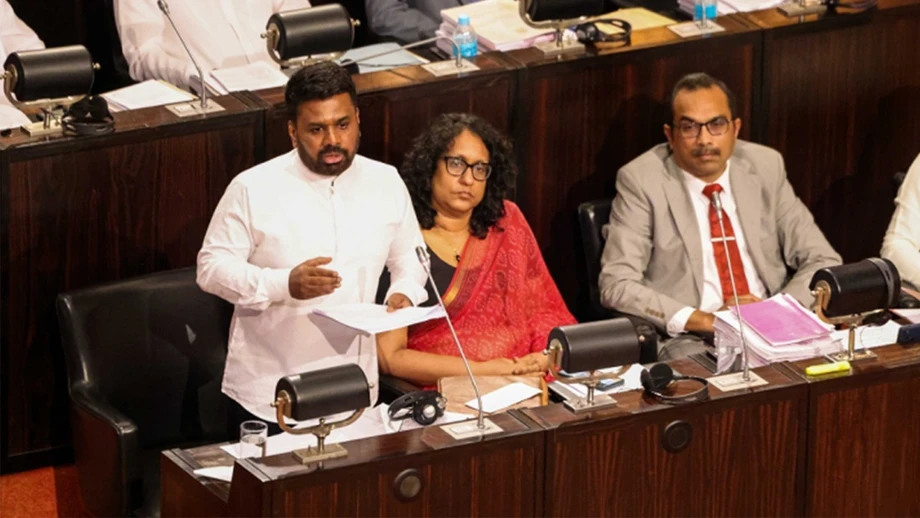
Sri Lanka's Central Bank Governor Nandalal Weerasinghe said on Friday, November 20, 2026, that people and businesses should not hold back from taking loans if they can repay them. The bank sets no target for how fast lending should grow, he said. Instead, it uses interest rates to influence borrowing across the economy and watches whether demand could add pressure to prices or imports.
İçindekiler
The advice comes while total credit in the economy is growing at more than 20%. That pace has eased from about 24% to 25% during the recovery after the country's crisis in 2024 and 2025, but remains high by Sri Lankan standards. Weerasinghe said growth above 20% for two years in a row is rare in the country's history, and reflects a strong supply of loans.
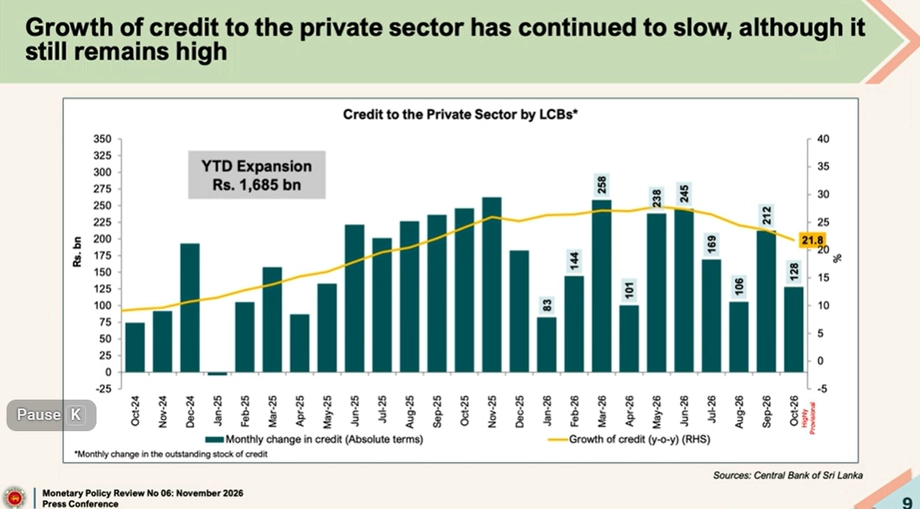
Private sector credit, a measure of loans to businesses and households that excludes government borrowing, was growing by about 21.8% annually. The overall credit figure and the private sector figure describe different parts of lending, so they should not be read as competing estimates.
Weerasinghe rejected suggestions that borrowers should wait before taking loans. He said borrowing at current market rates could support economic activity when it meets a genuine need or backs a viable business opportunity, and when the borrower has the means to make repayments. His advice was not a direction to take on debt regardless of cost or circumstances.
"At this moment, according to the prevailing interest rates, if one has the ability to borrow, one should definitely take a loan," Weerasinghe said.
For families, the practical test is whether income can cover repayments alongside other costs. For a business, banks also examine whether a proposed project is workable and whether the borrower is likely to repay. A loan can support spending, investment and jobs, but a borrower who cannot meet payments may face financial strain.
Why is the Central Bank watching total demand?
The Central Bank is concerned with how borrowing by both the private sector and the government affects aggregate demand. In simple terms, aggregate demand is the total demand for goods and services across the economy. More lending can give households and companies money to spend, while government borrowing also supports public spending.
Some of that spending can go toward imported goods. If demand for imports rises sharply, it can put pressure on the country's external finances. Strong demand can also push prices higher if businesses cannot quickly supply enough goods and services. The Central Bank therefore watches whether borrowing is adding to inflationary pressure, rather than setting a fixed amount of credit banks must provide.
Interest rates are one way the bank influences that demand. Higher rates generally make loans more expensive and can discourage some borrowing; lower rates can make loans more attractive. The policy is aimed at demand across the economy, Weerasinghe said, rather than at stopping lending to a chosen industry or type of borrower.
The Central Bank does not decide how much each bank lends to particular sectors. It sets policy rates and provides liquidity, while banks assess applications and borrowers decide whether to seek loans. Liquidity means the funds available in the financial system for banks to make payments and provide credit.
What do the lending figures show?
Private credit growth has cooled from its faster pace but remains above 20%. Some months still brought large increases, including September. The continuing growth comes as market borrowing costs have moved higher following a 100 basis point policy rate increase in May. One hundred basis points equal one percentage point.
Central Bank Economic Research Department Director Dr. Lasitha Pathberiya gave figures showing that, since the May increase, the interbank call money rate had risen by 108 basis points, the rate on one year Treasury bills by 146 basis points, and the weekly prime lending rate by 166 basis points. The prime lending rate is the rate banks charge their most creditworthy corporate customers.
The increases show how a policy change can pass through to rates in financial markets, though the size of the change differs by type of borrowing. The Central Bank has also made a further rate increase, described as the second increase in the week, as private credit growth remained high. The Monetary Policy Board raised the Overnight Policy Rate (OPR) by 100 basis points to 8.75% at its May 25 meeting, according to the Central Bank statement, published the following day. The next regular monetary policy review statement was scheduled for July 22, 2026.
Are banks turning borrowers away?
A recent Central Bank Credit Supply Survey pointed to rising demand for loans alongside tighter supply. Weerasinghe said that combination does not mean banks are being told to discourage lending. Lower interest rates had encouraged more people and companies to seek credit, while lenders still need to check whether each applicant can repay and whether a business project is viable.
Those checks matter because a loan is a promise to repay money, usually with interest, over an agreed period. A bank that lends without assessing the borrower's finances could face losses, while the borrower could be left with payments they cannot manage. Central Bank rules require lenders to consider repayment ability, project feasibility and risk before approving credit.
Weerasinghe said personal loans, pawning and financial services were among the faster growing areas of credit. He said interest rate policy is intended to cool or support lending across the economy, rather than curb credit in one sector while favouring another.
The survey's indication of tighter supply and the governor's explanation describe two sides of the lending process: more customers may be applying, while lenders continue to judge each application. The Credit Supply Survey, which concluded on May 5, 2025, covers all Licensed Commercial Banks and Licensed Specialized Banks. Its diffusion indices range from -100 to 100 and weight banks' responses by each bank's exposure to the banking sector's Total Gross Loan Portfolio; an index above zero indicates an increase, below zero a decrease, and zero no change. The overall willingness-to-lend index was 45.3 in 2025 Q1, down from 47.5 in 2024 Q4, but the survey described willingness to lend as high; its 2025 Q2 outlook was 57.3. Willingness to lend increased for retail, corporate and SME lending in 2025 Q1, while declining for SOEs. The overall loan-demand index rose from 52.1 in 2024 Q4 to 63.2 in 2025 Q1, with a 2025 Q2 outlook of 52.7. The overall rejected-loan-applications index was 0.8 in 2025 Q1, a marginal increase.
Why does the Governor defend gold backed loans?
Pawning allows a borrower to receive a loan by pledging gold as security. Weerasinghe said farmers and others who may not have easy access to ordinary bank credit use this form of borrowing, including to pay cultivation costs and repay the loan after a harvest.
The Governor said gold backed loans can be a more accessible option than borrowing from informal lenders, which may charge higher rates. He also pointed to a Central Bank rule limiting loans to 70% of the value of the gold pledged. This loan to value limit means a person who pledges gold worth 100 rupees can borrow no more than 70 rupees under the cap.
"It's the easiest way to have some credit for people who don't have normal, easy access to credit. It's a reasonable interest rate compared to the informal market rate," Weerasinghe said.
Rising gold prices can increase the value of the collateral and allow borrowers to take larger loans. A sharp fall in gold prices could leave the pledged asset worth less relative to the debt. Weerasinghe said the 70% limit is meant to reduce risk for both customers and lenders.
The cap does not remove the borrower's repayment duty. A person still needs to repay under the loan terms to recover the pledged gold. For farmers, the timing of repayment may depend on income from a harvest, which can make the ability to repay an important part of deciding whether to borrow.
What rules apply to non bank lenders?
The Central Bank will retain a cap on deposit rates offered by non bank financial institutions, including registered finance companies. The ceiling is calculated using a formula linked to Treasury bill and bond rates, and is adjusted every three months.
Weerasinghe said many companies already offer rates below the cap. He said the limit is intended to stop registered finance companies from offering unusually high rates to attract deposits, a practice that can create risks for the firms and their customers.
"The cap is there to prevent even registered finance companies offering unnecessarily high rates to attract deposits. That's a risk," Weerasinghe said.
A deposit rate is the interest a financial firm pays a customer for keeping money with it. A cap places a ceiling on that offer. The Governor did not give a new date for a change to the policy; he said the existing formula would continue to be adjusted quarterly.
How did credit and rates change?
During 2024 and 2025, total credit growth was about 24% to 25% during the recovery after the crisis.
In May 2026, the Central Bank raised its Overnight Policy Rate by 100 basis points to 8.75%, followed by higher interbank, Treasury bill and prime lending rates.
In September, private sector credit recorded a large monthly expansion, while its annual growth remained about 21.8%.
On November 20, 2026, Governor Nandalal Weerasinghe said the Central Bank had no fixed credit growth target and urged borrowing where repayment was affordable.
The timeline shows why the Central Bank is balancing access to credit against the risk of demand growing too quickly. Lending remains strong, market rates have risen, and the bank says it will assess borrowing through its effect on economy wide demand and inflation.
Key Points
The Central Bank has no fixed target for credit growth.
Total credit growth is above 20%, down from about 24% to 25% during the 2024 to 2025 recovery.
Private sector credit was growing by about 21.8% annually.
The Central Bank says borrowers should weigh their ability to repay, while banks assess each loan application.
The 2025 Q1 Credit Supply Survey recorded a willingness-to-lend index of 45.3, down from 47.5 in the previous quarter, while loan demand rose to 63.2.
Gold backed loans are subject to a 70% loan to value cap, and the deposit rate cap for non bank financial institutions will remain in place.