
Singapore Launches National AI Missions for Financial Services
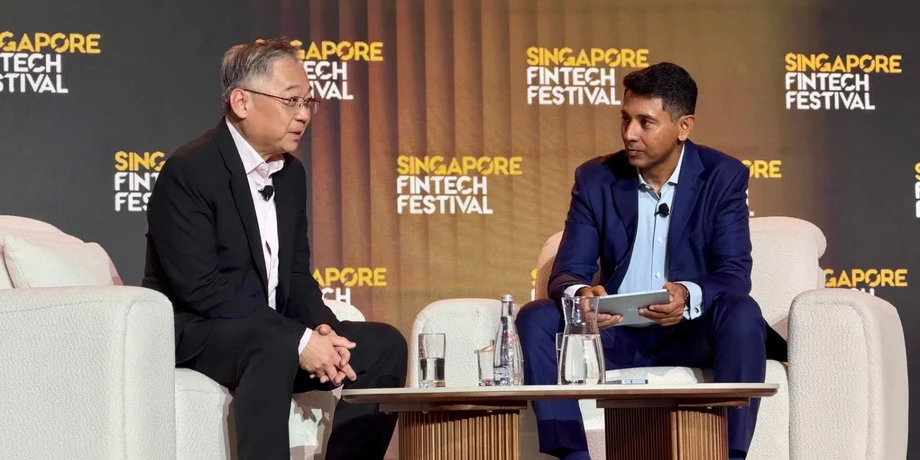
Singapore has introduced three ambitious national artificial intelligence initiatives aimed at reshaping the financial sector. Deputy Prime Minister and Monetary Authority of Singapore Chairman Gan Kim Yong unveiled the plans during his keynote address at the Singapore FinTech Festival on 18 November 2026. The government established the National AI Council earlier in the year, chaired by Prime Minister Lawrence Wong, to steer technological transformation across key economic pillars. These new missions focus on stopping financial crime, expanding loan access for smaller enterprises, and preparing the industry for autonomous software agents that execute transactions independently. The rollout comes as the nation adapts to new trade regulations from abroad while positioning itself as a reliable global hub for digital finance.
İçindekiler
- Singapore Launches National AI Missions for Financial Services
- Navigating New Semiconductor Regulations
- Pooling Data to Disrupt Financial Crime
- Expanding Credit Access for Small Businesses
- Enabling Safe Autonomous Financial Agents
- Uniting Industry Partners Through the Future of Finance Institute
- Enhancing Everyday Digital Payments
- At a Glance
Navigating New Semiconductor Regulations
The strategic push into advanced technology arrives against the backdrop of shifting international trade controls. During his address, the Deputy Prime Minister acknowledged the new rules issued by the US Department of Commerce regarding remote access to advanced semiconductors. These regulations require companies to obtain specific licenses before exporting or re-exporting advanced computing chips to five designated countries, including Singapore. Authorities are actively collaborating with affected firms to evaluate the business impact and engaging with American regulators to maintain operational access. While reaffirming Singapore as a steadfast partner to international enterprises, the leadership delivered a firm warning against illegal activity. Officials stressed that the nation maintains a strict stance against any entities attempting to abuse their local corporate presence to bypass foreign laws.
Pooling Data to Disrupt Financial Crime
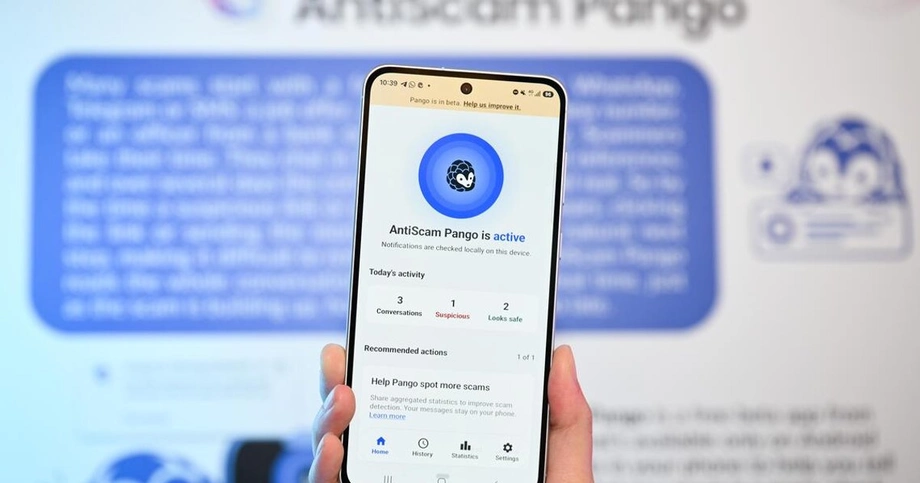
The first national mission targets the rising sophistication of financial fraud by tackling cross-institutional visibility gaps. Scams frequently shift stolen funds through multiple bank accounts within minutes, meaning individual institutions investigating isolated fragments of a transaction chain often fail to halt the transfer. To solve this visibility problem, the central bank is currently running a proof-of-value trial alongside five commercial banks to pool transaction data securely. This collaborative dataset allows advanced artificial intelligence models to uncover illicit patterns that no single lender could detect independently. Building upon this ongoing trial, the Ministerial Keynote by Mr Gan Kim Yong published by the Monetary Authority of Singapore outlines plans to launch a dedicated design study early next year to blueprint an industry-wide scam detection utility. Initially centered on domestic accounts and data, the framework intends to expand into cross-border cooperation with foreign jurisdictions over time.
Expanding Credit Access for Small Businesses
The second national mission seeks to modernize how lenders evaluate the creditworthiness of small and medium-sized enterprises. Traditional lending models rely heavily on historical financial performance, static repayment records, and tangible personal collateral, which often disadvantages newer startups that lack extensive operating histories. Fragmented records spanning bank accounts, business invoices, and government registries make comprehensive risk assessment difficult for traditional financial institutions. To bridge these information gaps, the government is inviting technology developers to test credit assessment tools powered by realistic synthetic data rather than sensitive real-world records. Financial institutions, public agencies, and small businesses are contributing domain expertise and direct feedback to ensure the tools meet practical borrowing needs. With richer data inputs, machine learning models can identify viable commercial patterns that conventional reviews overlook, ultimately lowering borrowing costs and allowing lenders to proactively notify eligible enterprises of suitable financing options.
Enabling Safe Autonomous Financial Agents
The third mission looks toward the future of machine-led commerce by preparing the financial ecosystem for autonomous software agents capable of executing transactions on behalf of users. These software systems promise to streamline cash management and accelerate cross-institutional payments, but such operational autonomy requires strict accountability and clearly defined boundaries. Authorities are collaborating with industry participants to test practical solutions within controlled environments such as dedicated regulatory sandboxes. One primary area of experimentation involves linking autonomous agents with purpose-bound money, which embeds programmatic conditions into digital funds. This ensures that payments release automatically only when predefined contractual terms are fully met and verified by the system. The Future of Finance Institute is spearheading these technical trials, creating specialized sandboxes where institutions can safely test agent-initiated payments and automated treasury management before deploying them to live environments.
Uniting Industry Partners Through the Future of Finance Institute
To turn these strategic goals into concrete operational realities, the Future of Finance Institute is uniting industry players, technology researchers, and public agencies. The institute works to formulate risk management standards and practical deployment guidelines for the financial sector. Four major local and international institutions have stepped forward as official launch partners for the institute, including DBS Bank, Oversee-Chinese Banking Corporation, Standard Chartered, and United Overseas Bank. These financial institutions bring vital commercial scale and technical expertise to the collaborative initiatives. Beyond core banking operations, the institute is partnering with public research organizations such as the Agency for Science, Technology and Research to advance locally grounded speech-to-text artificial intelligence for real-time compliance monitoring. Additional collaborations with AI Singapore focus on building specialized technical talent through dedicated apprenticeship programs.
Enhancing Everyday Digital Payments
Parallel to the national artificial intelligence initiatives, the financial sector continues upgrading its core digital payment infrastructure. Officials released the comprehensive second-phase report for the second generation of PayNow, detailing structural upgrades designed to make everyday transactions simpler and more secure. A central component of this rollout is the new universal conversion switch that enables both local residents and international visitors to pay at any participating merchant using their preferred mobile payment application. These infrastructure enhancements complement broader efforts to maintain robust public trust while expanding digital connectivity across retail and corporate environments.
At a Glance
- Deputy Prime Minister Gan Kim Yong announced three National AI Missions for financial services at the Singapore FinTech Festival on 18 November 2026.
- The first mission establishes a framework for an industry-wide scam detection utility following a data-pooling trial involving five commercial banks.
- The second mission utilizes synthetic datasets to improve credit assessment and financing access for small and medium-sized enterprises.
- The third mission introduces controlled regulatory sandboxes for autonomous software agents to execute transactions safely using digital money.
- The Future of Finance Institute partnered with major financial institutions including DBS, OCBC, Standard Chartered, and United Overseas Bank to guide technological risk management standards.