
Education Chief Steps Down Over Preparation Failures
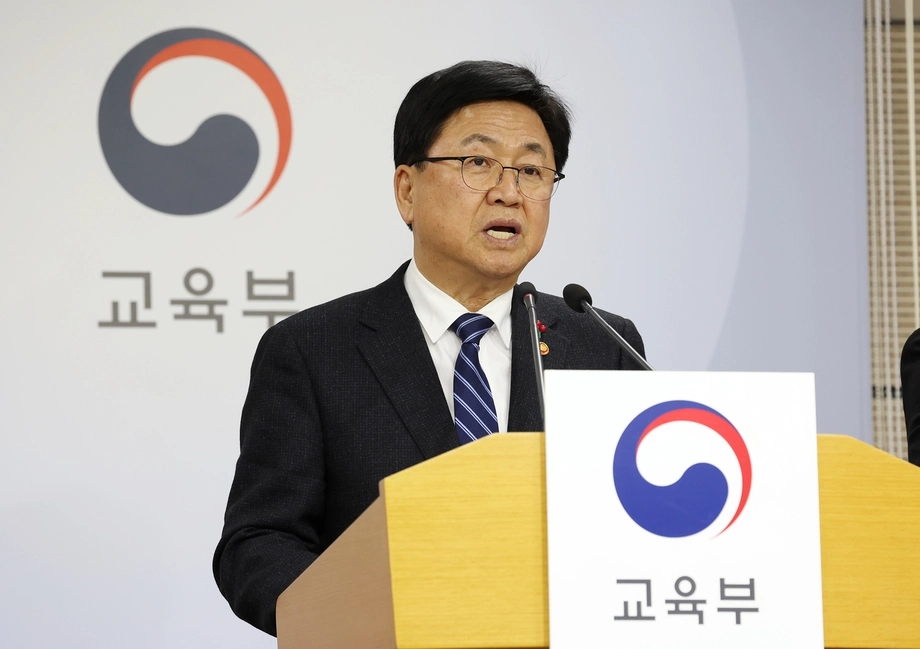
South Korea Education Minister Choi Kyo-jin resigned on Sunday, November 22, 2026, taking responsibility for public confusion and security shortcomings during the country's high-stakes college entrance examinations. The 72-year-old official faced intense scrutiny after expressing doubt during a parliamentary hearing about whether authorities could successfully catch tech-savvy cheaters. President Lee Jae Myung accepted the resignation through the presidential office, following a week marked by widespread anxiety over artificial intelligence malpractice.
İçindekiler
The controversy escalated rapidly after a top-scoring candidate in a national professional qualification test confessed to orchestrating an elaborate cheating scheme. Education Minister Choi Kyo-jin did not appear at pre-exam press briefings, leaving a vice minister to announce emergency protocols. Critics from the political opposition argued that the leadership was absent while students faced rigorous physical inspections at testing centers across the country.
Now that the exam is over, I take full responsibility and hereby offer my resignation.
The Confession That Shook National Confidence
The crisis began to unfold on November 15, 2026, when a candidate named Han Won-seok admitted to cheating during the 63rd certified tax accountant examination. Han achieved a near-perfect score of 397.5 out of 400 in the first stage and secured the top overall rank after the second stage in July. Investigators learned that he used a miniature camera to photograph test questions, transmitted the images to generative artificial intelligence software, and read the answers on his smartphone. The revelation shocked a public that places immense cultural and economic value on professional credentials and academic placement.
Authorities responded swiftly to the admission by invalidating his passing certificate and barring him from the tax accountant examination for five years. Police investigators received his written confession through his legal counsel and launched a formal inquiry into his testing methods. The scandal prompted immediate concern because traditional supervision methods, such as assigning two proctors per room, failed to detect the unauthorized equipment. The incident also recalled earlier cheating concerns involving wearable technology and digital assistance during admissions tests.
Security Measures and High-Tech Cheating Detection
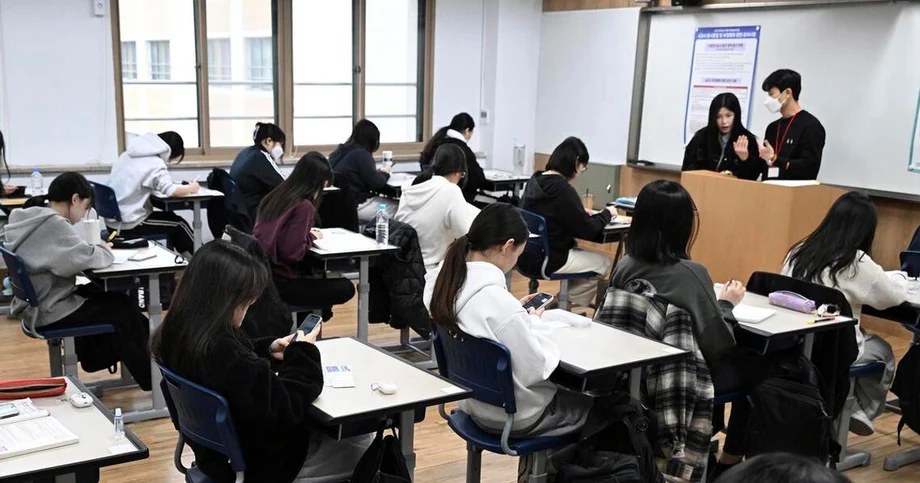
The annual nine-hour College Scholastic Ability Test, widely known as the Suneung, took place on November 19, 2026, under unprecedented security restrictions. The examination serves as a gateway to prestigious universities, lucrative employment opportunities, and favorable social standing. Officials deployed a series of emergency protocols to prevent candidates from smuggling digital tools into the 1,312 designated testing sites. Measures included blocking public wireless networks near examination rooms, placing tamper-evident stickers over clothing buttons, and stationing specialist staff trained to recognize smart glasses.
Testing authorities also introduced a random verification procedure where proctors collected mobile phones and placed unexpected phone calls to verify that devices were completely powered down. Despite these precautions, officials identified 111 cases of electronic device misconduct during the Suneung. Nearly half of those violations were caught after the government broadcasted three emergency alert notifications to force the surrender of hidden smartphones. Demonstrations held prior to the exam showed that advanced devices, such as AI-powered eyewear, could solve complex mathematics problems in a fraction of the allotted time, highlighting the severe technical challenges facing modern proctors.
Expanding Investigations Into National Qualifications
Government agencies widened their inquiries beyond the Suneung to encompass all major professional certification exams administered throughout the year. The Human Resources Development Service of Korea and the Ministry of Employment and Labor initiated comprehensive audits of recent testing results. During the subsequent guard-dog qualification test held on November 21, authorities caught six additional individuals using prohibited equipment. Five of those suspects possessed active tablet computers, while another triggered a random security call by failing to silence a device.
Lawmakers and administrative officials are currently drafting legislative overhauls to strengthen penalties for examination fraud. Proposals include increasing the mandatory testing ban for proven cheaters from three years to ten years and mandating the public disclosure of scores for top-ranking candidates. President Lee Jae Myung also revised bounty rules for whistleblowers, establishing a minimum reward of 100 million won for verified reports of examination fraud to dismantle collaborative cheating rings from within. These aggressive policy changes build upon earlier bounty framework updates announced earlier in the week.
Political Fallout and Institutional Overhauls
The political fallout from the cheating scandal centered heavily on ministerial accountability and government preparedness. Opposition representatives argued that the education ministry reacted too slowly to warnings regarding artificial intelligence capabilities. Prime Minister Han Seong-sook coordinated multi-agency responses after the tax accountant confession, while President Lee called for a total restructuring of the national testing apparatus. The presidential administration emphasized that academic dishonesty directly threatens the foundational fairness of society.
Investigators are also reviewing past cases of suspected malpractice, including incidents involving wearable devices at university essay evaluations. The Ministry of Education plans to cooperate with technology companies to trace unauthorized queries submitted during active testing windows. As earlier investigations revealed, the rapid evolution of generative software requires continuous adaptation by testing oversight bodies. Future examination cycles will feature enhanced signal jamming equipment and expanded closed-circuit television monitoring in rented facilities.
The Essentials
- Education Minister Choi Kyo-jin resigned on November 22, 2026, accepting responsibility for exam preparation challenges.
- A total of 111 electronic device violations were recorded during the November 19 Suneung examination.
- Whistleblower rewards for reporting exam fraud start at a minimum of 100 million won per verified violator.
- Authorities are pursuing legislative changes to extend testing bans for convicted cheaters up to ten years.
- Investigators continue to audit national certification tests following the professional tax accountant confession.